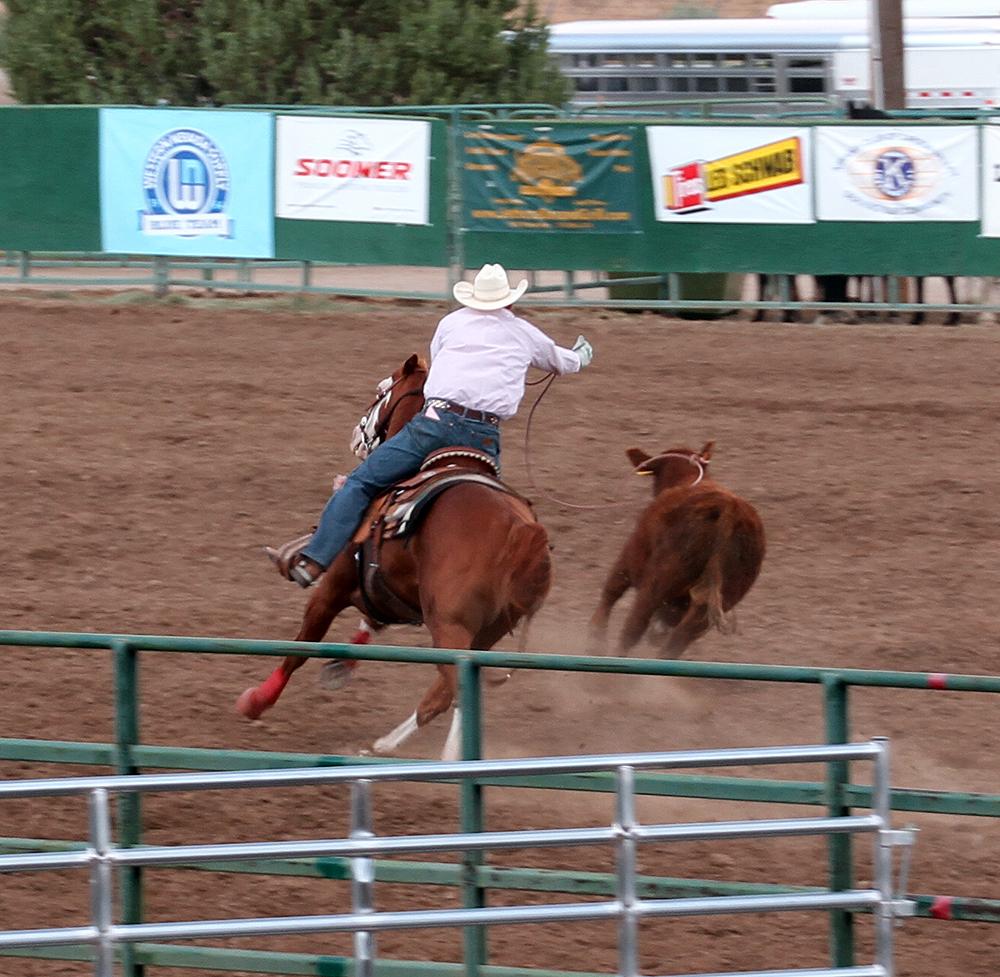
Near miss - score one for the cows!
This picture is included in the Buckaroo Fest at the Minden Ranch Rodeo, Douglas County Fairgrounds July 2013 photo album belonging to Badger. It has been uploaded on 21 Jul 2013 at 11:41PM. Votes: 0 You can return to Badger's album or open your photo album. Comments Re: Near miss - score one for the cows! I don't like chasing any animals.....
Posted at 26 Jul 2013 at 6:51AM by Trianda Re: Near miss - score one for the cows! It may seem that all they do is chase, but there is much more to this art than first meets the eye. Perhaps a brief explanation will help: The modern cowboy you see here is an animal herder who actively tends cattle on ranches here in North America, traditionally on horseback, and often performs a multitude of other ranch-related tasks. They need these skills to manage their work, and perform it safely for the cows, horses and themselves. Rodeo has a unique quality of origin to which no other professional sport can lay claim. It emerged from an industry that is still active to this day, from the daily routine and tasks of a low paying job with long hours performed by ranch hands who came to know very well the animals with which they lived. Plainly put: These men and women work long hours for low pay, with animals because they love animals. If you've got a close bond with an animal, you take care of it. Riding broncs and roping calves are the events that were born on Western ranches.
The contests of rodeo riding and roping require only two things of the horses and cattle... either to buck or to run, actions that are natural to them. Animal welfare, which is caring for and meeting an animal's needs, is practiced in the sport of rodeo. Rodeo people respect, admire, and want to take care of the animals that are so important to their way of life. That is why they choose this way of life in the first place. It's obvious that rodeo is not taxing for the huge, powerful bulls that toss cowboys around like rag dolls, but some people may wonder if roping is hard on calves. A calf has more than tripled its weight when it is first roped, which is at 225-250 pounds, and is a strong animal. It takes the special roping and handling skills exhibited by the rodeo cowboy to manage the strength of a calf whose instinct is to flee or fight rather than cuddle. It also helps to understand that the lariat does not give the same kind of noose a regular rope offers; rather is smooth and stiff, providing an easy hold for a calf - not a harmful one. The lariat grasp loosens with a flick of the cowboys wrist and the calf, quickly freed. The roping contest is an extension of the necessary skills developed by ranch cowboys to hold cattle for doctoring, etc., without benefit of pens and corrals - this allows a greater freedom in open ranging for cows, rather than fenced stockholds. The muscular structure of a calf and its hairy, thick hide allows prudent roping without harm. As is observed, immediately upon removal of the rope, calves jog trot out of the arena in a most unconcerned manner. Injury to rodeo animals is infrequent with rates documented at less than 1%. The use of horses, calves and bulls in rodeo is so undemanding that they stay healthy and perform well for many years...far longer than they do in the wild or regular ranch atmosphere. It is not unusual for a bucking horse to be kicking up its heels in fine fashion over the age of 30 and many bulls are still active buckers at 20 years of age (The full life expectancy of a cow is 20-25 years if grazing naturally in a bountiful field. If they are dairy cows, 5 years is normal because of the hormones). Veterinarians attribute it to the good care they receive which includes quality feed and adequate exercise. Of special note:
OK, so this wasn't as brief as planned  but there was a lot to say! but there was a lot to say!
Posted at 26 Jul 2013 at 4:47PM by Badger Re: Near miss - score one for the cows! thanks for the long info ! I don't understand everything as it is not my mother tongue, but I do understand a little more of it here in Austria/Europe we don't have such rodeos at all see you 
Posted at 26 Jul 2013 at 5:53PM by Trianda Re: Near miss - score one for the cows! My pleasure! I'm curious, do you have ranches/farms that raise beef in Austria? If so, do they use horses to do so, or is it entirely by hand?
Posted at 26 Jul 2013 at 8:52PM by Badger Re: Near miss - score one for the cows! there are no horses in that way, they do it by themselves.....
Posted at 28 Jul 2013 at 8:17PM by Trianda (You must be logged in to post comments) |
©2000-2026 GoldToken.com LLC. All rights reserved. |